Finding the right skincare product can be a challenge, especially if you have oily or acne-prone skin. One of the features you should look for in products is that they are non-comedogenic. But what does this term really mean, and why is it so important? In this article, we explain everything you need to know about non-comedogenic cosmetic products, from their definition to how to identify them and which ones are most recommended. We also give you tips on creating an effective skincare routine and preventing breakouts.
What “non-comedogenic” really means
The term non-comedogenic refers to products formulated not to clog pores, thereby reducing the formation of comedones (blackheads and whiteheads). A non-comedogenic product allows the skin to breathe and function properly. Although it does not guarantee that no reaction will occur, it significantly lowers the risk of pore blockage.¹
Why comedones form
Comedones appear when pores become blocked with sebum, dead cells and bacteria, causing inflammation and spots. Factors such as genetics, hormonal changes, stress and unsuitable products can contribute to their formation. A non-comedogenic moisturiser provides hydration without clogging the pores.
Which skin types benefit from non-comedogenic products
They are especially beneficial for oily, combination or acne-prone skin. They can also be useful for dry skin, as they provide hydration without causing breakouts, helping to keep pores clean and prevent blemishes.
Benefits of using non-comedogenic products
- Prevents breakouts: reduces the appearance of blackheads and spots.
- Improves texture: keeps skin smooth, even and radiant.
- Sebum control: helps regulate oil production.
- Reduces inflammation: decreases redness and discomfort associated with acne.
- Enhances the efficacy of other treatments: allows serums, retinoids and topical antibiotics to penetrate more effectively.
How to read the label and INCI list
Always check the label and ingredient list (INCI) to confirm that a product is non-comedogenic. Avoid pore-clogging ingredients such as mineral oil, lanolin, isopropyl alcohol and certain silicones. If in doubt, consult specialist databases or a dermatologist.
Recommended non-comedogenic products
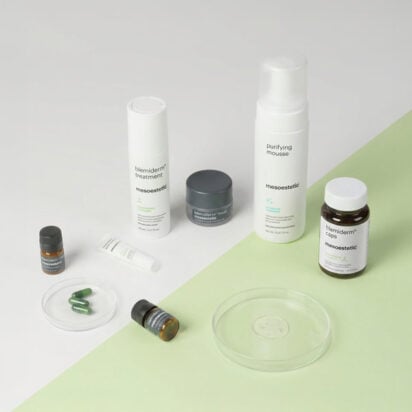
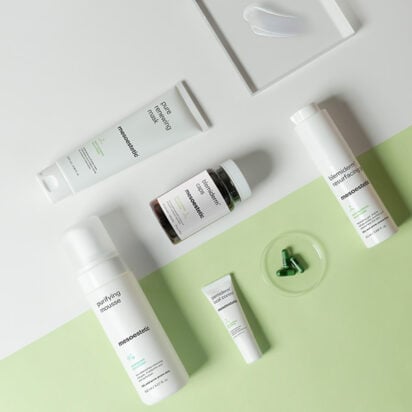
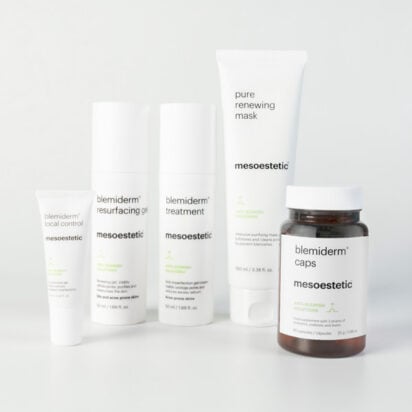
At mesoestetic® we offer a wide range of non-comedogenic products:
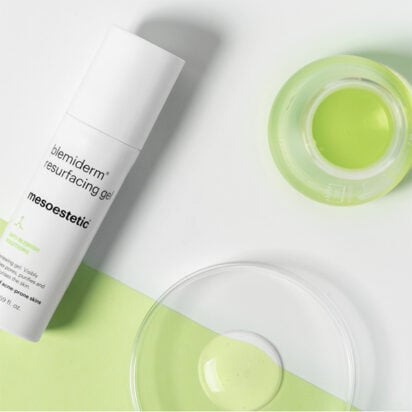
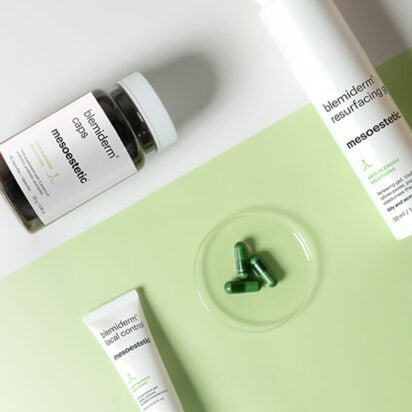
blemiderm® resurfacing gel
Exfoliating gel that removes dead cells and unclogs pores.

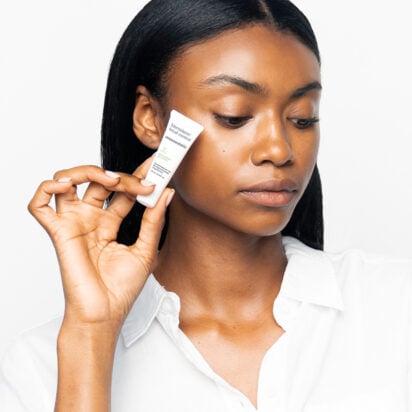
blemiderm® local control
Localised treatment that reduces inflammation and helps to accelerate the healing of spots.

blemiderm® treatment
Overnight gel-cream for oily skin with blemishes. Helps to unclog pores and reduce excess sebum.

mesoprotech® water veil
High UVA/UVB protection sunscreen. Lightweight, moisturising, and perfect for oily skin.

purifying mousse
Purifying cleanser that removes impurities and sebum without drying out the skin.

Non-comedogenic skincare routine
- Cleansing: twice a day with a gentle cleanser.
- Targeted treatment: serums or creams with salicylic acid or benzoyl peroxide on affected areas.
- Light hydration: lightweight oil-free cream.
- Daily sun protection: non-comedogenic sunscreen, even on cloudy days.
Common mistakes that worsen acne
Avoiding certain mistakes is crucial to keeping skin clear and preventing breakouts.
Risk ingredients in cosmetics
Some common cosmetic ingredients can clog pores and trigger acne. Avoid products containing mineral oil, lanolin, isopropyl alcohol and certain types of silicones. It is always better to opt for non-comedogenic creams.
Habits that worsen oily or acne-prone skin
Certain habits can aggravate oily skin and promote acne. Avoid touching your face with dirty hands, squeezing spots, and using overly harsh products that dry out the skin.
Daily care and lifestyle tips
- Balanced diet: fruit, vegetables and whole foods; avoid processed products and refined sugars.
- Consistent routine: daily cleansing, exfoliation 1–2 times per week, and a weekly purifying mask.
- Healthy habits: get enough sleep, reduce stress and exercise regularly.
Frequently asked questions about non-comedogenic products
Are all products labelled “non-comedogenic” truly effective? Not necessarily; always check the INCI.
Can they be used on dry skin? Yes, there are hydrating non-comedogenic formulations.
How often should acne-prone skin be exfoliated? 1–2 times per week.
In summary, choosing non-comedogenic products is key to maintaining healthy skin and preventing imperfections.
Scientific references:
¹ https://www.ncbi.nlm.nih.gov/pmc/articles/PMC10525320/

Mireia Vilalta
Degree in biotechnology and specialist in dermocosmetic medical devices, such as peels, anti-acne treatments and depigmentation treatments.